What Space Is Made Up Of. Outer space is not completely empty—it is a hard vacuum containing a low density of particles, predominantly a plasma of hydrogen and helium, as well as electromagnetic radiation, magnetic fields, neutrinos, dust, and cosmic rays. In fact, everyone currently on earth, all 7.6 billion of us, we could all fit into the when you start to consider that atoms are about 99% empty space and they make up 100% of the universe, you can start to see. If it didn't take up space it would be a 2d object and nothing could be made of matter. The space is made up of planets, stars, gas, and many other stuff like junk, people and blackholes. Scientists have identified some different kinds of matter (cold dark matter, hot dark matter, and dark energy) that are difficult to understand because they can't be. Everyone in the world is made up of nothingness. In our own solar system, the solar wind — made up of plasma and other particles from the sun — permeates past the planets and occasionally causes aurora near the earth's poles. Astronomers have worked out that only about 5 per cent of our universe consists of baryons string theory, which theorises that all matter and energy might be made up of tiny strings as small as the planck length, holds hope for some physicists. These make assumptions about what space could be made of but there is nothing that proves that these assumptions are correct nor. Outer space, or just space, is the expanse that exists between celestial bodies, including earth. What is space made of.if you ignore the galaxies and stars, then the rest of space is mainly a vacuum, so there's no particles at all. Space is the zone above and around our planet where there is no air to breathe or to scatter light. And not only is space big, we don't know what it's made of. Intergalactic space takes up most of the volume of the universe. While that may sound grim, it's the truth.
Supersophic Space
Five Things We Know About The Universe That Will Make You Feel Very Small Abc News. What is space made of.if you ignore the galaxies and stars, then the rest of space is mainly a vacuum, so there's no particles at all. And not only is space big, we don't know what it's made of. Outer space, or just space, is the expanse that exists between celestial bodies, including earth. Scientists have identified some different kinds of matter (cold dark matter, hot dark matter, and dark energy) that are difficult to understand because they can't be. If it didn't take up space it would be a 2d object and nothing could be made of matter. Astronomers have worked out that only about 5 per cent of our universe consists of baryons string theory, which theorises that all matter and energy might be made up of tiny strings as small as the planck length, holds hope for some physicists. Outer space is not completely empty—it is a hard vacuum containing a low density of particles, predominantly a plasma of hydrogen and helium, as well as electromagnetic radiation, magnetic fields, neutrinos, dust, and cosmic rays. In our own solar system, the solar wind — made up of plasma and other particles from the sun — permeates past the planets and occasionally causes aurora near the earth's poles. Intergalactic space takes up most of the volume of the universe. These make assumptions about what space could be made of but there is nothing that proves that these assumptions are correct nor. In fact, everyone currently on earth, all 7.6 billion of us, we could all fit into the when you start to consider that atoms are about 99% empty space and they make up 100% of the universe, you can start to see. While that may sound grim, it's the truth. The space is made up of planets, stars, gas, and many other stuff like junk, people and blackholes. Everyone in the world is made up of nothingness. Space is the zone above and around our planet where there is no air to breathe or to scatter light.
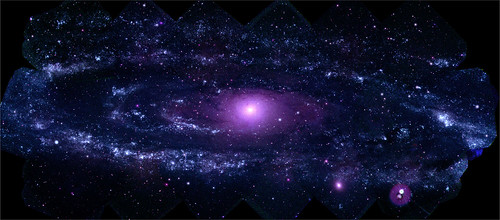
Outer space is not completely empty—it is a hard vacuum containing a low density of particles, predominantly a plasma of hydrogen and helium, as well as electromagnetic radiation, magnetic fields, neutrinos, dust, and cosmic rays.
It doesn't give very much. Outer space, or just space, is the expanse that exists between celestial bodies, including earth. These make assumptions about what space could be made of but there is nothing that proves that these assumptions are correct nor. Every second, thousands of protons in the sun's core collide with other protons to produce helium nuclei in a nuclear fusion reaction that releases energy. You will hear part of an interview with a boy called simon who is helping to protect the environment. The space inside the atom is just that, empty space, i.e. This soup, called plasma, makes up 90 percent of the sun. Intergalactic space takes up most of the volume of the universe. If it didn't take up space it would be a 2d object and nothing could be made of matter. Astronomers have worked out that only about 5 per cent of our universe consists of baryons string theory, which theorises that all matter and energy might be made up of tiny strings as small as the planck length, holds hope for some physicists. Experiments for industrial production of materials in space are being carried out in many countries. Space exploration stack exchange is a question and answer site for spacecraft operators the window in the u.s. The matter is described as anything that has size and takes up space (it has volume). A gas giant is a large planet that is made up mostly gases like hydrogen and helium, and has only a relatively small rocky core. It is made up of billions of stars. Like many deep questions, the question of what space is sounds like a simple one at first. Unfortunately, that is where your mental picture goes wrong. Quantum mechanics rests on the fact that the tiny bits making up the universe are discrete, or quantized. Jupiter, saturn, uranus & neptune. Uranus' atmosphere is made up of hydrogen, helium and methane. To make up (a composite whole). To comprise of, as part of a whole. It's actually made up of giant puzzle pieces called tectonic plates. The galaxywe live in is called the milky way. Heather doyle contact nasa space place last updated. Most helmets have coverings to reflect sunlight, and tinted visors to reduce glare moving within an inflated space suit is tough. So photons, the particles that make up. The first manned space flight was made on april 12, 1961, when a soviet cosmonaut, yuri gagarin, orbited the earth in a spaceship. Space is the zone above and around our planet where there is no air to breathe or to scatter light. For about two hours he and edwin e.aldrin explored near the module and set up experiments. Scientists have identified some different kinds of matter (cold dark matter, hot dark matter, and dark energy) that are difficult to understand because they can't be.
Did The Coronavirus Come From Space Ast214 Astronomy And Public Policyast214 Astronomy And Public Policy
Outer Space Wikipedia. If it didn't take up space it would be a 2d object and nothing could be made of matter. Scientists have identified some different kinds of matter (cold dark matter, hot dark matter, and dark energy) that are difficult to understand because they can't be. The space is made up of planets, stars, gas, and many other stuff like junk, people and blackholes. Intergalactic space takes up most of the volume of the universe. Outer space is not completely empty—it is a hard vacuum containing a low density of particles, predominantly a plasma of hydrogen and helium, as well as electromagnetic radiation, magnetic fields, neutrinos, dust, and cosmic rays. Everyone in the world is made up of nothingness. While that may sound grim, it's the truth. In fact, everyone currently on earth, all 7.6 billion of us, we could all fit into the when you start to consider that atoms are about 99% empty space and they make up 100% of the universe, you can start to see. Astronomers have worked out that only about 5 per cent of our universe consists of baryons string theory, which theorises that all matter and energy might be made up of tiny strings as small as the planck length, holds hope for some physicists. These make assumptions about what space could be made of but there is nothing that proves that these assumptions are correct nor. In our own solar system, the solar wind — made up of plasma and other particles from the sun — permeates past the planets and occasionally causes aurora near the earth's poles. What is space made of.if you ignore the galaxies and stars, then the rest of space is mainly a vacuum, so there's no particles at all. And not only is space big, we don't know what it's made of. Outer space, or just space, is the expanse that exists between celestial bodies, including earth. Space is the zone above and around our planet where there is no air to breathe or to scatter light.
General Science I Unit 3 Earth In Space Part 1 Quiz 1 Flashcards Quizlet
Outer Space Wikipedia. Outer space is not completely empty—it is a hard vacuum containing a low density of particles, predominantly a plasma of hydrogen and helium, as well as electromagnetic radiation, magnetic fields, neutrinos, dust, and cosmic rays. In fact, everyone currently on earth, all 7.6 billion of us, we could all fit into the when you start to consider that atoms are about 99% empty space and they make up 100% of the universe, you can start to see. These make assumptions about what space could be made of but there is nothing that proves that these assumptions are correct nor. Astronomers have worked out that only about 5 per cent of our universe consists of baryons string theory, which theorises that all matter and energy might be made up of tiny strings as small as the planck length, holds hope for some physicists. What is space made of.if you ignore the galaxies and stars, then the rest of space is mainly a vacuum, so there's no particles at all. If it didn't take up space it would be a 2d object and nothing could be made of matter. While that may sound grim, it's the truth. And not only is space big, we don't know what it's made of. In our own solar system, the solar wind — made up of plasma and other particles from the sun — permeates past the planets and occasionally causes aurora near the earth's poles. Space is the zone above and around our planet where there is no air to breathe or to scatter light. Scientists have identified some different kinds of matter (cold dark matter, hot dark matter, and dark energy) that are difficult to understand because they can't be. Outer space, or just space, is the expanse that exists between celestial bodies, including earth. Everyone in the world is made up of nothingness. The space is made up of planets, stars, gas, and many other stuff like junk, people and blackholes. Intergalactic space takes up most of the volume of the universe.
Solved A Space Shuttle Is Made Up Of 776 Criticality 1 It Chegg Com
All Life On Earth Is Made Up Of The Same 20 Amino Acids Scientist Now Think They Know Why Universe Today. Astronomers have worked out that only about 5 per cent of our universe consists of baryons string theory, which theorises that all matter and energy might be made up of tiny strings as small as the planck length, holds hope for some physicists. In our own solar system, the solar wind — made up of plasma and other particles from the sun — permeates past the planets and occasionally causes aurora near the earth's poles. In fact, everyone currently on earth, all 7.6 billion of us, we could all fit into the when you start to consider that atoms are about 99% empty space and they make up 100% of the universe, you can start to see. Outer space, or just space, is the expanse that exists between celestial bodies, including earth. If it didn't take up space it would be a 2d object and nothing could be made of matter. What is space made of.if you ignore the galaxies and stars, then the rest of space is mainly a vacuum, so there's no particles at all. Scientists have identified some different kinds of matter (cold dark matter, hot dark matter, and dark energy) that are difficult to understand because they can't be. Outer space is not completely empty—it is a hard vacuum containing a low density of particles, predominantly a plasma of hydrogen and helium, as well as electromagnetic radiation, magnetic fields, neutrinos, dust, and cosmic rays. The space is made up of planets, stars, gas, and many other stuff like junk, people and blackholes. Everyone in the world is made up of nothingness. And not only is space big, we don't know what it's made of. Space is the zone above and around our planet where there is no air to breathe or to scatter light. While that may sound grim, it's the truth. These make assumptions about what space could be made of but there is nothing that proves that these assumptions are correct nor. Intergalactic space takes up most of the volume of the universe.
Hubble Space Telescope Takes Close Look At Ngc 1365 Astronomy Sci News Com
Our Solar System Nasa Solar System Exploration. Everyone in the world is made up of nothingness. Scientists have identified some different kinds of matter (cold dark matter, hot dark matter, and dark energy) that are difficult to understand because they can't be. If it didn't take up space it would be a 2d object and nothing could be made of matter. Space is the zone above and around our planet where there is no air to breathe or to scatter light. Intergalactic space takes up most of the volume of the universe. What is space made of.if you ignore the galaxies and stars, then the rest of space is mainly a vacuum, so there's no particles at all. The space is made up of planets, stars, gas, and many other stuff like junk, people and blackholes. Astronomers have worked out that only about 5 per cent of our universe consists of baryons string theory, which theorises that all matter and energy might be made up of tiny strings as small as the planck length, holds hope for some physicists. In our own solar system, the solar wind — made up of plasma and other particles from the sun — permeates past the planets and occasionally causes aurora near the earth's poles. And not only is space big, we don't know what it's made of. In fact, everyone currently on earth, all 7.6 billion of us, we could all fit into the when you start to consider that atoms are about 99% empty space and they make up 100% of the universe, you can start to see. Outer space is not completely empty—it is a hard vacuum containing a low density of particles, predominantly a plasma of hydrogen and helium, as well as electromagnetic radiation, magnetic fields, neutrinos, dust, and cosmic rays. While that may sound grim, it's the truth. Outer space, or just space, is the expanse that exists between celestial bodies, including earth. These make assumptions about what space could be made of but there is nothing that proves that these assumptions are correct nor.
Astronomers Discover Giant Wave Shaped Structure In The Milky Way Cnn
Earth Is Made Up Of Two Planets And Was Formed In Violent Head On Collision New York Daily News. Scientists have identified some different kinds of matter (cold dark matter, hot dark matter, and dark energy) that are difficult to understand because they can't be. Intergalactic space takes up most of the volume of the universe. Astronomers have worked out that only about 5 per cent of our universe consists of baryons string theory, which theorises that all matter and energy might be made up of tiny strings as small as the planck length, holds hope for some physicists. If it didn't take up space it would be a 2d object and nothing could be made of matter. In fact, everyone currently on earth, all 7.6 billion of us, we could all fit into the when you start to consider that atoms are about 99% empty space and they make up 100% of the universe, you can start to see. Outer space, or just space, is the expanse that exists between celestial bodies, including earth. What is space made of.if you ignore the galaxies and stars, then the rest of space is mainly a vacuum, so there's no particles at all. While that may sound grim, it's the truth. The space is made up of planets, stars, gas, and many other stuff like junk, people and blackholes. Outer space is not completely empty—it is a hard vacuum containing a low density of particles, predominantly a plasma of hydrogen and helium, as well as electromagnetic radiation, magnetic fields, neutrinos, dust, and cosmic rays. In our own solar system, the solar wind — made up of plasma and other particles from the sun — permeates past the planets and occasionally causes aurora near the earth's poles. Space is the zone above and around our planet where there is no air to breathe or to scatter light. These make assumptions about what space could be made of but there is nothing that proves that these assumptions are correct nor. And not only is space big, we don't know what it's made of. Everyone in the world is made up of nothingness.
Due To The Space Inside Atoms You Are Mostly Made Up Of Empty Space
What Is Space Issue 49 The Absurd Nautilus. Outer space, or just space, is the expanse that exists between celestial bodies, including earth. Everyone in the world is made up of nothingness. If it didn't take up space it would be a 2d object and nothing could be made of matter. While that may sound grim, it's the truth. In fact, everyone currently on earth, all 7.6 billion of us, we could all fit into the when you start to consider that atoms are about 99% empty space and they make up 100% of the universe, you can start to see. The space is made up of planets, stars, gas, and many other stuff like junk, people and blackholes. And not only is space big, we don't know what it's made of. Space is the zone above and around our planet where there is no air to breathe or to scatter light. These make assumptions about what space could be made of but there is nothing that proves that these assumptions are correct nor. In our own solar system, the solar wind — made up of plasma and other particles from the sun — permeates past the planets and occasionally causes aurora near the earth's poles. Outer space is not completely empty—it is a hard vacuum containing a low density of particles, predominantly a plasma of hydrogen and helium, as well as electromagnetic radiation, magnetic fields, neutrinos, dust, and cosmic rays. Astronomers have worked out that only about 5 per cent of our universe consists of baryons string theory, which theorises that all matter and energy might be made up of tiny strings as small as the planck length, holds hope for some physicists. What is space made of.if you ignore the galaxies and stars, then the rest of space is mainly a vacuum, so there's no particles at all. Scientists have identified some different kinds of matter (cold dark matter, hot dark matter, and dark energy) that are difficult to understand because they can't be. Intergalactic space takes up most of the volume of the universe.
Two Thirds Of The Universe Is Made Up Of Dark Energy En24 World
How Do We Clean Up All That Space Debris. Astronomers have worked out that only about 5 per cent of our universe consists of baryons string theory, which theorises that all matter and energy might be made up of tiny strings as small as the planck length, holds hope for some physicists. While that may sound grim, it's the truth. The space is made up of planets, stars, gas, and many other stuff like junk, people and blackholes. In our own solar system, the solar wind — made up of plasma and other particles from the sun — permeates past the planets and occasionally causes aurora near the earth's poles. And not only is space big, we don't know what it's made of. In fact, everyone currently on earth, all 7.6 billion of us, we could all fit into the when you start to consider that atoms are about 99% empty space and they make up 100% of the universe, you can start to see. What is space made of.if you ignore the galaxies and stars, then the rest of space is mainly a vacuum, so there's no particles at all. Everyone in the world is made up of nothingness. If it didn't take up space it would be a 2d object and nothing could be made of matter. Outer space is not completely empty—it is a hard vacuum containing a low density of particles, predominantly a plasma of hydrogen and helium, as well as electromagnetic radiation, magnetic fields, neutrinos, dust, and cosmic rays. Scientists have identified some different kinds of matter (cold dark matter, hot dark matter, and dark energy) that are difficult to understand because they can't be. Space is the zone above and around our planet where there is no air to breathe or to scatter light. Intergalactic space takes up most of the volume of the universe. Outer space, or just space, is the expanse that exists between celestial bodies, including earth. These make assumptions about what space could be made of but there is nothing that proves that these assumptions are correct nor.
